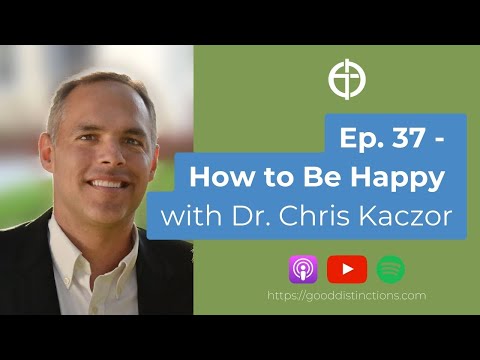
Ep. 37 - How to Be Happy with Dr. Chris Kaczor
Christopher Kaczor
33.06
20 May 2024
15 September 2025
Dr. Christopher Kaczor discusses his book 'How to Be Happy' and the intersection of positive psychology, faith, and reason. He shares how his personal experiences led him to explore the field of positive psychology and how it aligns with traditional Christian practices. Dr. Kaczor also addresses the controversy surrounding mindfulness and its compatibility with Christian practice. He emphasizes the importance of prayer and intentional habits in finding happiness and living a meaningful life. Download the eBook "How to Be Happy" for FREE from Word on Fire here: https://ebook.wordonfire.org/howtobehappy Who is Dr. Kaczor? Dr. Christopher Kaczor (rhymes with razor) graduated from the Honors Program of Boston College and earned a Ph.D. four years later from the University of Notre Dame. A Fulbright Scholar, Dr. Kaczor is a former Federal Chancellor Fellow at the University of Cologne and William E. Simon Visiting Fellow in the James Madison Program at Princeton University. His twelve books include The Gospel of Happiness, The Seven Big Myths about Marriage, A Defense of Dignity, The Seven Big Myths about the Catholic Church, The Ethics of Abortion, O Rare Ralph McInerny: Stories and Reflections on a Legendary Notre Dame Professor, Thomas Aquinas on the Cardinal Virtues; Life Issues-Medical Choices; Thomas Aquinas on Faith, Hope, and Love; The Edge of Life, and Proportionalism and the Natural Law Tradition. Dr. Kaczor's views have been in The New York Times, The Washington Post, The Wall Street Journal, The Los Angeles Times, Huffington Post, National Re view, NPR, BBC, EWTN, ABC, NBC, FOX, CBS, MSNBC, TEDx, and The Today Show. Takeaways Positive psychology validates the importance and efficacy of many traditional Christian practices, such as gratitude, in promoting happiness and well-being. Mindfulness can be seen as a mental exercise that strengthens the mind and can be compatible with Christian practice when approached with the right intention. Making time for prayer and developing intentional habits, such as daily prayer and exercise, can lead to a more fulfilling and meaningful life. The intersection of faith and reason is not a conflict but a harmonious relationship that supports and strengthens one another. It is important to be specific and concrete in setting goals and habits, as this increases the likelihood of following through and achieving positive outcomes. Keywords #positivepsychology #faith #reason #Christian #mindfulness #prayer #intentionalhabits #happiness #meaningfullife #catholic #philosophy