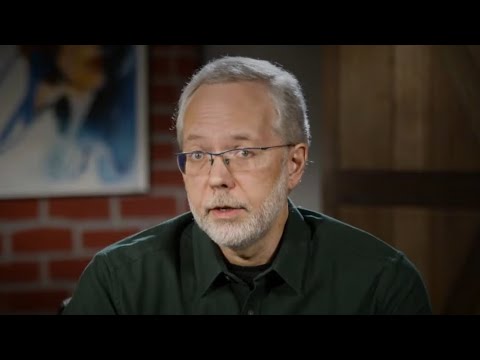
How Could Mere People Have Written The Bible? Part 1 – Michael Heiser & Tim Mackie
Tim Mackie
52.36
21 February 2026
1 March 2026
Part 2: https://youtu.be/Hk8Ti7NdptE?si=8bFSb9Pr2TTj3F5C
Part 3: Coming soon
In Part 1 of the 'Who Wrote the Bible?' series, Michael Heiser and Tim Mackie unpack the Bible's divine-human authorship. Heiser explains that the Bible was authored by diverse humans providentially prepared by God throughout their lives to address specific audiences, rejecting dictation theory—where the Holy Spirit whispers exact words—as evidenced by variations in the Synoptic Gospels (Matthew, Mark, Luke), which recount the same Jesus events with differing wording, order, and emphases suited to Jewish, Roman, and Gentile readers, respectively, much like non-identical student papers signal authenticity rather than plagiarism. He views "inconsistencies" not as errors but expected human perspectives harmonising overall, akin to varied eyewitness newspaper accounts of the Gulf War or family pet's death, insisting no biblical discrepancy lacks scholarly resolution and critiquing modern historical standards as unworkable even for personal memoirs, while ancient divine attributions (common in Near Eastern texts) do not undermine historicity. Heiser details pre-1947 Hebrew Bible textual traditions—the Masoretic (oldest complete manuscript ~1008 AD, Leningrad Codex), Septuagint (Greek translation ~200 BC, differing from Masoretic), and Samaritan Pentateuch—confirmed by Dead Sea Scrolls (Qumran caves, ~300-200 BC), which include all three plus non-aligned fragments, showing Qumran scribes preserved variants without privileging one as uniquely inspired, exemplified by Deuteronomy 32:8's "sons of God" reading in Scrolls/Septuagint over Masoretic "sons of Israel". Mackie reflects on his academic journey studying Hebrew Bible origins, observing faith crises among peers learning its "earthy" human history due to misconceptions viewing Scripture as purely divine without humanity, using M.C. Escher's "Drawing Hands" as a paradox metaphor—like chicken-and-egg or Jesus' full divinity/humanity—to illustrate the Bible's inseparable divine-human origins, where God's providence interweaves with human experiences, authors, and contexts to produce a unified, authoritative text that speaks God's words through public history.
#Bible
#michaelHeiser
#timMackie
#Inspiration
#Synoptic
#Gospels
#DeadSeaScrolls
#Masoretic
#Septuagint
#Deuteronomy
#Divine
#Human
#Providence
#Theology
#Scripture
#Inconsistencies
#Historicity
#Qumran
#mcEscher
#Paradox
#Faith
#Apologetics
#Textual
#Traditions
#HolySpirit
#Ancient
#Jesus
#Origins