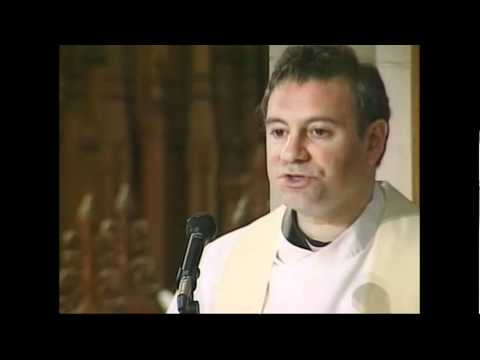
Sunday Service - 4/22/12 - Sam Wells
Sam Wells
88.04
26 April 2012
20 August 2025
A service of worship in Duke University Chapel. The Reverend Dr Samuel Wells delivers a sermon entitled "Let Earth and Heaven Agree." Opening Excerpt from the Sermon (26:04) "Have you ever sat still in the early morning and heard the dawn chorus? Have you ever felt your heart rise in a throbbing ovation as the birds of the air form an orchestra of glory and voice creation's praise? Fifty years ago the conservationist Rachel Carson published a book entitled Silent Spring. Carson pointed out the way pesticides were coming to dominate American agriculture, and were damaging not only birds and animals, but also humans. Just imagine, she said, a spring in which no birds sang: it would be a silent spring. And if that spring lies in the not-too-distant future for the birds, how long before humanity meets the same fate? First there will be a silent spring; eventually, there will be no spring at all. Those who marked the first Earth Day on April 22, 1970 credited the publication of Silent Spring with the beginnings of the modern environmental movement. And Carson's book marks a suitable emblem for ecological concerns, because it synthesizes the four dimensions that have characterized the movement ever since. The first is the urgent sense of human catastrophe. Ecological concerns, such as those raised by Rachel Carson, have a wide following, but what makes them a focus of universal anxiety is the claim that they threaten to diminish human flourishing in the immediate term and terminate human existence in the medium to long term. "We're all doomed." That kind of threat makes the ecological movement unique in its claim on the public imagination. It's a slow burning version of the threat of nuclear annihilation that mesmerized people's vision at the height of the Cold War." Closing Excerpt from the Sermon: (43:49) "For Christians, the environmental crisis may be a problem. But it's certainly an opportunity. It's an opportunity because Earth Day is perhaps the greatest ever parable of the Christian story. Earth Day celebrates the wonder of creation, in its abundance and diversity. It recalls the day the birds began to sing. Earth Day calls us to repentance when we remember the fall, the human destruction of God's precious gift. It portrays the day the birds fell silent, and forgot how the song was supposed to go. But Earth Day does more than that. It reminds us that there was a bird that came to earth and taught us the tune we'd forgotten, making our hearts sing again. And that there will come a day when all creation sings: not just the birds but the rocks and stones and oceans and mountains themselves will cry Alleluia. And that in the meantime we remember this story by the way we sing and seek to turn our lives and our world into a song. We remember this story by the way we inspire others to sing with us and find in themselves a voice they never knew they had. We remember this story by singing this song back to those who've forgotten it until they remember how it goes. That's what Christians do in the face of the ecological crisis. That's what Christians do on Earth Day. That's the way Christians turn Earth Day into what it was always destined to be.Heaven day." Bulletin: http://bit.ly/Ir3aV3 Sermon: http://bit.ly/KcdJZk