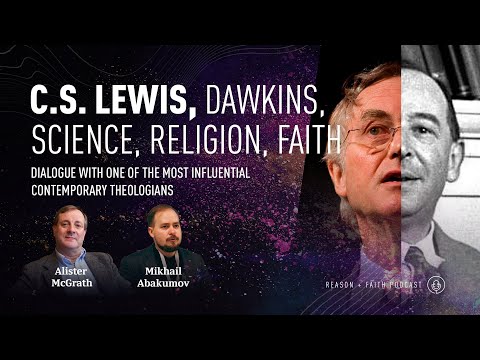
C.S. Lewis, Dawkins, Science, Religion, Protestantism (Prof. Alister McGrath) |R+F Podcast
Alister McGrath
45
4 April 2025
15 September 2025
Science, religion, theology how are they related? Who are Protestants really? Why have Dawkins-style arguments been and still are very popular? What was C.S. Lewis like and why is he so relevant? We will discuss these and other questions with one of the most respected theologians in the world Prof. Alister McGrath! (@alistermcgrathchristianthe1158) Note: Apparently Prof. McGrath got the dates mixed up, as he indicates in his books that Lewis' conversion occurred in 1930, whereas Lewis himself wrote about 1929. PODCAST GUEST Alister McGrath is a theologian, apologist, priest, scholar and public intellectual (DPhil, Oxford University). Until recently he held the Andreas Idreos Professor of Science and Religion at the University of Oxford. McGrath is best known for his books and textbooks (over 50 of them!), including both academic monographs and popular works. According to a number of rankings, he is considered the most influential contemporary theologian. Prof. McGrath's website: https://alistermcgrath.org/ His books: https://www.amazon.com/stores/Alister-E.-McGrath/author/B01M4RVVEB?ref=sr_ntt_srch_lnk_3&qid=1743775626&sr=1-3&isDramIntegrated=true&shoppingPortalEnabled=true&ccs_id=b46791b0-5d83-4514-a0d9-5184be8fbdc0 TIMESTAMPS 00:00 Preview 1:06 Intro 2:34 How did you become a Christian and why did you decide to become a scholar? 4:57 How would you describe the relationship between science and religion? 7:17 What about Stephen Jay Gould's idea of "Non-overlapping magisteria"? 8:40 Why have Dawkins-style arguments been and continue to be very popular? What will happen to the new atheism in the future? 13:57 Some of your books deal with so-called "narrative apologetics", do you think this approach is better, for discussion or dialog? 16:18 Is a Thomas Aquinas-style approach appropriate today? 17:29 How does knowledge of history affect theological conclusions? What advice would you give on combining history and theology? 19:18 Why did you decide to write another biography of C.S. Lewis? 21:22 Do you see Lewis as important for academic theologians and philosophers? 24:07 Do you see any dangerous ideas in Lewis's theology or philosophy? 26:04 Did Lewis really start writing fantasy because he was refuted by Elizabeth Enscombe? 28:09 How did you discover the error in Lewis's memoir? 30:40 How would you describe Lewis's conversion to Christianity? 32:38 Was Lewis an idealist? 34:06 Can we define Protestantism? Can modern movements like, say, Pentecostals or Baptists be called Protestant? 36:00 Why the "prosperity gospel" is not a Protestant movement 38:07 Can you give any advice to young students on how to do research? 39:19 Do you have any model for reading books? 40:45 What books and resources would you recommend to our listeners to begin their journey through Christian thought? 42:05 Do you have any future book projects or ideas you'll be developing? 42:36 Is it worth it to read radically different authors? 44:18 Conclusion RESOURCES More of our podcasts: https://youtube.com/playlist?list=PLXybS3t4RIdegq-Kn1ArHcAc1br9MdR8S&si=ZQAWYPio_P7vHmnz