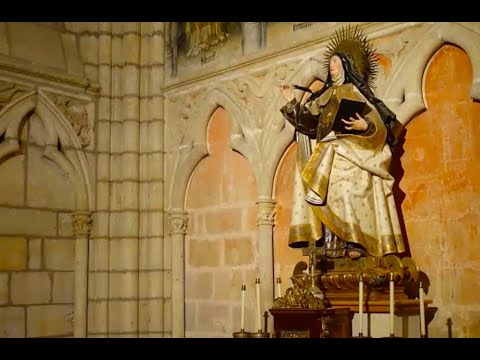
Medieval Catholic Mysticism: Teresa of Avila
Telford Work
76.57
31 October 2020
21 November 2025
An introduction (especially for evangelical Protestants) to medieval (especially Spanish Catholic) mysticism, centering in St. Teresa of Avila, for a class reading her autobiography.
Lecture outline at telfordwork.net/classes/asp/mystics.html
One clarification:
In the lecture I use the term point vierge for the unsullied center of the soul where God can be found, but I don't mention that it's Thomas Merton's term. Teresa called it the center of the Interior Castle. The two concepts are compatible, but I should have clarified whose terminology I was using.
Here's a piece by Robert Barron that links the concept as various writers use it: https://uscatholic.org/articles/200807/youre-holier-than-you-know/ Money grafs in that article:
"When the divine is consciously acknowledged as the ground and organizing center of one's existence, something like wholeness or holiness is the result.
"This same truth is indicated frequently through "soul" language. Soul is not, for Christians, some spiritual entity alongside the body; instead, it is the deepest center and source of all that we are: body, emotions, passions, and mind. It is what the Bible calls "the heart," that place-sometimes soft and pliable, other times hard as a rock-that God most often addresses and in which he longs to dwell. It is that deepest wellspring that Saint Teresa of Ávila calls the "interior castle," that Meister Eckhart refers to as the "inner wine cellar," and that Thomas Merton knows as the point vièrge, the "virginal point" where we stand unsullied in the presence of God.
"When we live in the interior castle, we are safe; when we are at home in the inner wine cellar, we are regularly intoxicated with the spirit; when we identify with the virginal point, we are one with Mystery. When we live in this space, we are, in a word, holy."