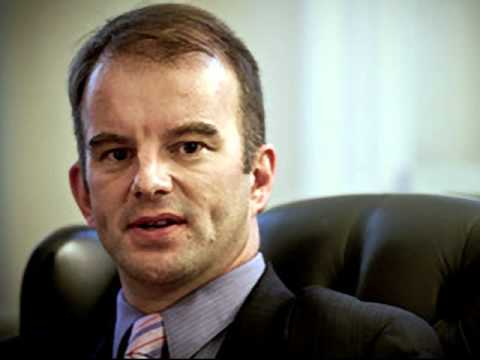
John Owen: The Man and His Time (Session 1) - Dr Carl R. Trueman
Carl Trueman
40.27
18 September 2012
20 August 2025
My Twitter page https://twitter.com/RichMoo50267219 John Owen: The Man and His Time (Session 1) - Dr Carl R. Trueman Link to my "Christian Devotional Readings" Facebook page: https://www.facebook.com/pages/Christian-Devotional-Readings/196846270398160?ref=hl http://www.sermonaudio.com Carl R. Trueman, Professor of Historical Theology and Church History and Paul Woolley Chair of Church History at Westminster Theological Seminary. Education MA, St. Catharine's College, Cambridge, 1988 PhD, University of Aberdeen, 1991 Teaching Tutorial Assistant in Church History, University of Aberdeen, 1991--1993 Lecturer in Theology, University of Nottingham, 1993--1998 Senior Lecturer in Church History, University of Aberdeen, 1998--2001 Westminster, 2001-- John Owen playlist: http://www.youtube.com/view_play_list?p=8259C11DFFBFD174 John Owen - (1616-1683), Congregational theologian Born at Stadhampton, Oxfordshire, Owen was educated at Queen's College, Oxford, where he studied classics and theology and was ordained. Because of the "high-church" innovations introduced by Archbishop William Laud, he left the university to be a chaplain to the family of a noble lord. His first parish was at Fordham in Essex, to which he went while the nation was involved in civil war. Here he became convinced that the Congregational way was the scriptural form of church government. In his next charge, the parish of Coggeshall. in Essex, he acted both as the pastor of a gathered church and as the minister of the parish. This was possible because the parliament, at war with the king, had removed bishops. In practice, this meant that the parishes could go their own way in worship and organization. Oliver Cromwell liked Owen and took him as his chaplain on his expeditions both to Ireland and Scotland (1649-1651). Owen's fame was at its height from 1651 to 1660 when he played a prominent part in the religious, political, and academic life of the nation. Appointed dean of Christ Church, Oxford, in 1651, he became also vice-chancellor of the university in 1652, a post he held for five years with great distinction and with a marked impartiality not often found in Puritan divines. This led him also to disagreement, even with Cromwell, over the latter's assumption of the protectorship. Owen retained his deanery until 1659. Shortly after the Restoration of the monarchy in 1660, he moved to London, where he was active in preaching and writing until his death. He declined invitations to the ministry in Boston (1663) and the presidency of Harvard (1670) and chided New England Congregationalists for intolerance. He turned aside also from high preferment when his influence was acknowledged by governmental attempts to persuade him to relinquish Nonconformity in favor of the established church. His numerous works include The Display of Arminianism (1642); Eshcol, or Rules of Direction for the Walking of the Saints in Fellowship (1648), an exposition of Congregational principles; Saius Electorum, Sanguis Jesu (1648), another anti-Arminian polemic; Diatriba de Divina Justitia (1658), an attack on Socinianism; Of the Divine Original Authority of the Scriptures (1659); Theologoumena Pantodapa (1661), a history from creation to Reformation; Animadversions to Fiat Lux (1662), replying to a Roman Catholic treatise; Doctrine of Justification by Faith (1677); and Exercitationes on the Epistle to the Hebrews (1668-1684). --- Please watch: "A Call to Separation - A. W. Pink Christian Audio Books / Don't be Unequally Yoked / Be Ye Separate" https://www.youtube.com/watch?v=CBDg7u21cKY --~~~-----~~~--