Principle and Practice: Ren Girard, Politics, Religion, and Violence
James Alison
108
1 June 2016
20 August 2025
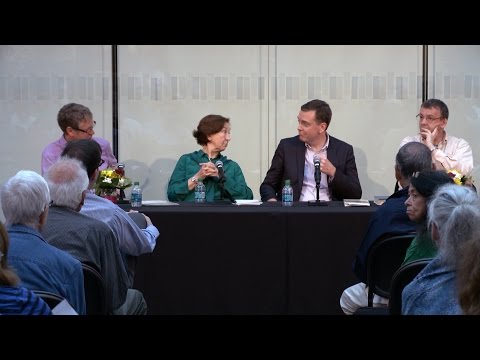
Presenters: Rev. James Alison and Duncan Morrow Moderator: Sheelah Trefl Hidden This video is part of the BCSTM Continuing Education Encore Events Archive. Visit http://www.bc.edu/encore to view this video and others like it. May 25, 2016 Description: The thought of Ren Girard (1923-2015), the late professor Emeritus at Stanford University, is recognized worldwide as a theory of desire and violence, and of how these structure human culture. An outsider in every field, Ren Girard has changed scholars' thinking in literature, anthropology, and religion. But you don't have to be a scholar or an insider of mimetic theory, as his thought is sometimes called, to understand it. Imitation is constant, scapegoating is an ever-present temptation, and violence is wrong. These simple insights have unlocked the meaning of modern novels, ancient myths, religious traditions, and the behavior of each and every one of us in our daily lives. In this panel discussion, Dr. Duncan Morrow and Fr. James Alison, examine Ren Girard's mimetic theory through theological, anthropological, and pastoral lenses, with particular attention to the dynamics of scapegoating, mimetic desire, and reconciliation. Dr. Morrow contextualizes Girard's insights within the Northern Irish conflict, emphasizing the relational anthropology of mimetic theory and its implications for peacebuilding and forgiveness. Fr. Alison extends the analysis through a Girardian reading of biblical texts such as Matthew 7:2829 and Matthew 10:1623, highlighting Jesus' subversion of sacrificial violence and the ethical imperative of non-rivalrous imitation. The Q&A session deepens the discussion by addressing systemic injustice, economic disparity, and the role of the Church in confronting structural violence. Panelists reflect on the mirroring effect of victimhood, the theological significance of debt as deferred vengeance, and the transformative power of witnessing the humanity of the "other." Drawing on examples from interfaith mediation and the legacy of Martin Luther King Jr., the presenters argue that authentic Christian witness requires a radical openness to truth, mercy, and the dismantling of sacrificial mechanisms. This dialogue offers a theological framework for spiritual formation, social healing, and the ethical demands of Christian discipleship in a post-sacrificial world. Cosponsored by America magazine, Imitatio' (an arm of the Peter Thiel Foundation), REMUS (Religion-Mimesis-Society), and the School of Theology and Ministry Rev. James Alison is a Catholic priest, systematic theologian, and author of a number of books including Knowing Jesus (1992), Undergoing God (2006), and Broken Hearts and New Creations: Intimations of a Great Reversal (2010). Duncan Morrow is director of community engagement and lecturer in politics at the University of Ulster. Sheelah Trefl-Hidden, moderator, is a research associate with the Heythrop Institute: Religion and Society. Learn more in a Crossroads course online: Courses on Catholic ethics and moral teaching: https://bit.ly/3Xz55Ds A course on Catholic Social Teaching https://bit.ly/40DhXdr If you would like to contribute to programming from the CSTM, visit https://bit.ly/cstm-innovation