Ending Wars Well: Getting To, and Beyond, Settlement
James Turner Johnson
84.39
24 July 2013
20 August 2025
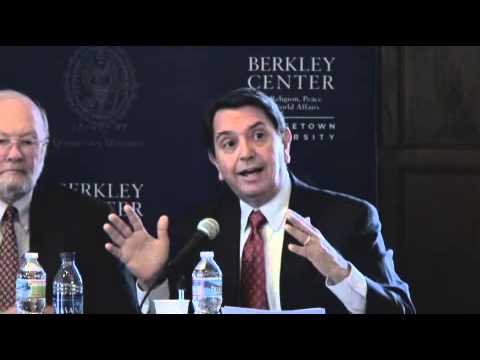
For more on this event, visit: http://bit.ly/13aYkmv For more on the Berkley Center, visit: http://berkleycenter.georgetown.edu This panel was part of the conference, Ending Wars Well: Just War Theory and Conflict's End. April 22, 2010 | How can war end well? President Obama's Nobel Prize speech argued, "There will be times when nations...will find the use of force not only necessary but morally justified." But what comes next? Just War theory, which the President referenced, traditionally focused on the morality of the decision to go to war (jus ad bellum) and the ethics of how war was fought (jus in bello) not the nature of war's end and post-conflict. However, protracted conflicts like that in Afghanistan challenge both the president's foreign policy as well as the theoretical and prescriptive foundations of just war thinking. This Berkley Center conference examined critical questions for a twenty-first century application of Just War theory to war's end (jus post bellum) in three key areas: the theoretical underpinnings of jus post bellum, issues for settlements and post-conflict arrangements, and operational considerations for practitioners engaged in late- and post-conflict planning. "A Good End and a Good Close" John Langan, S.J., Kennedy Institute of Ethics, Georgetown University "Moral Responsibility after Conflict: The Idea of Jus Post Bellum for the Twenty-First Century" James Turner Johnson, Rutgers University "In My End is My Beginning" Robert Royal, Faith and Reason Institute Moderator: Jean Bethke Elshtain, University of Chicago Divinity School and Leavey Chair in the Foundations of American Democracy, Georgetown University